Aug 6, 2026
Why Is Organic Saffron Bulk Extract Powder Worth the Premium?
Saffron has long had a reputation for being one of the most costly spices in the world, and that reputation carries over naturally to the extracted form. The organic saffron bulk extract powder is much more expensive than many other botanical extracts, and it’s natural for purchasers to wonder whether the price is genuinely justified. Here is what sets saffron bulk extract powder apart, the functional reasons behind its premium price tag, and the quality considerations to look for when choosing a supplier. Brands working on mood, eye health, or beauty from inside formulae may use this knowledge to explain why this ingredient deserves its position at a premium price range. Every link in the supply chain – from growing techniques to lab verification – adds to the ultimate cost, and knowing where that value truly originates from makes it simpler to assess vendors and requirements with confidence.
What Makes Organic Saffron Bulk Extract Powder Different From Ordinary Extracts?
Rare Botanical Source and Labor-Intensive Harvesting
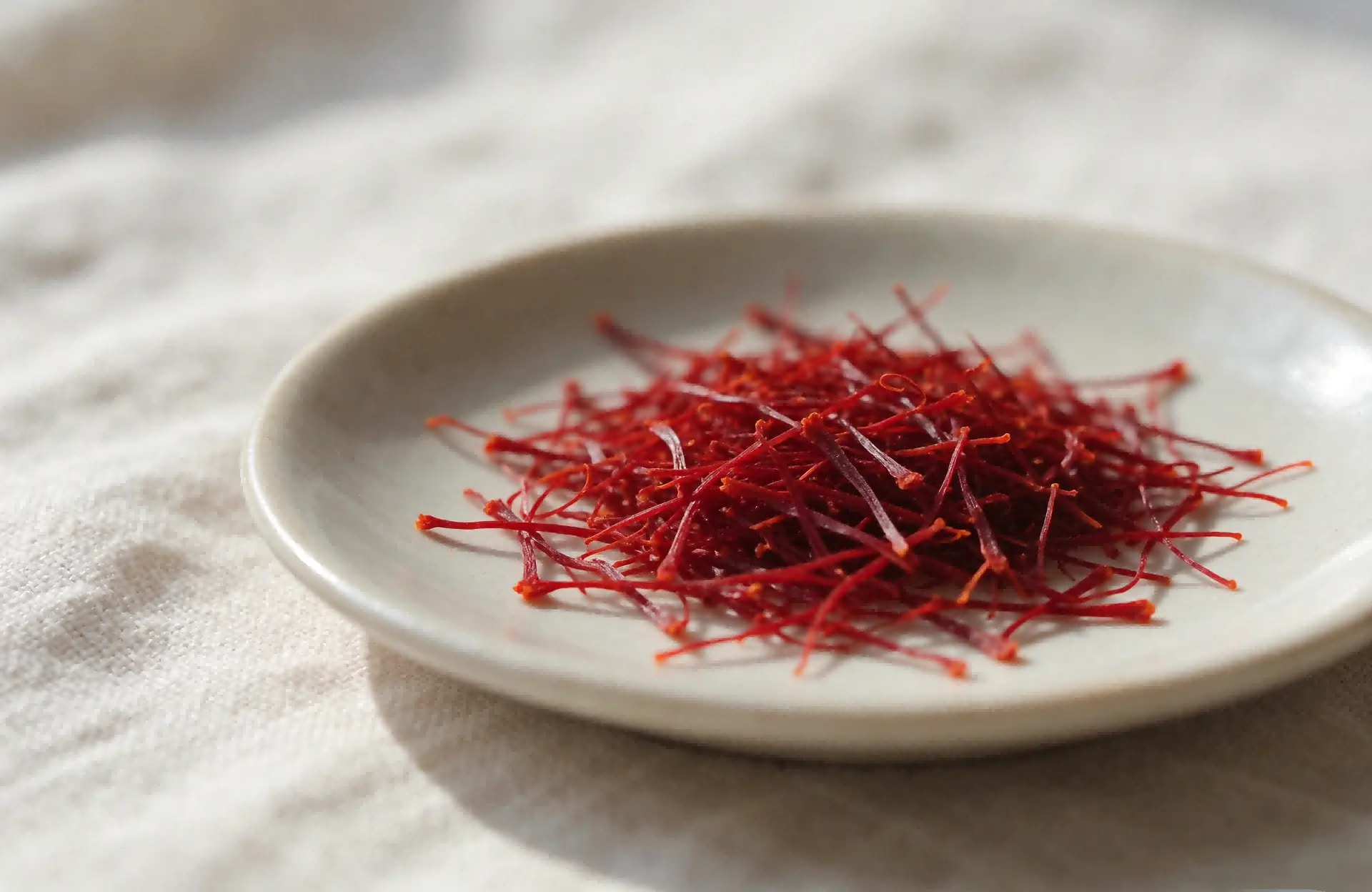
Saffron is derived from the flower Crocus sativus L. The fragile stigmas are gathered by hand. A very large number of flowers is needed to generate a modest amount of raw material. This labour-intensive technique is one of the main reasons why organic saffron bulk extract powder is more expensive than extracts from more plentiful plant sources. Harvesting of saffron is still mostly done by hand, unlike the mechanised harvesting of other commodities, which restricts supply from year to year and causes prices to be firmly tied to harvest output, weather, and regional growing capability each season. This scarcity is no marketing story, but a structural element of how the raw material is generated, and it passes right through to the cost of any extract made from it, no matter which provider finally processes and sells the finished powder.
Concentrated Active Biomarkers: Crocin and Safranal
Chemically, saffron bulk extract powder is special due to its high content of crocin and safranal, two active chemicals found only in this plant. Standardised extracts usually stipulate a crocin content of 5% or more and safranal levels of roughly 0.2% or more, checked by HPLC testing, with some requirements exceeding 10% total crocin depending on the extraction ratio. These uncommon plant-specific indicators can’t be readily recreated by other botanicals, providing formulators with a unique functional profile that typical plant powders can’t deliver at equal concentrations, even when those alternatives are promoted with identical health claims.
Organic Certification and Clean-Label Standards
The organic certification procedure is much more costly and difficult and involves a higher quality of agriculture and processing. Organic saffron bulk extract powder is often accompanied by paperwork verifying no synthetic pesticides and fertilisers were used throughout the growth cycle, and testing for pesticide residues in accordance with acceptable criteria such as the EU food safety regulations. The accreditation enables businesses developing clean-label goods with their marketing claims and gain consumer confidence, making the extra price more palatable for end consumers who value transparency and ingredient purity. Third-party audits and easy access to paperwork further build confidence, providing procurement teams with a paper trail to reference during retailer or regulatory examination.
Key Benefits That Justify the Premium of Saffron Bulk Extract Powder
Mood and Emotional Balance Support
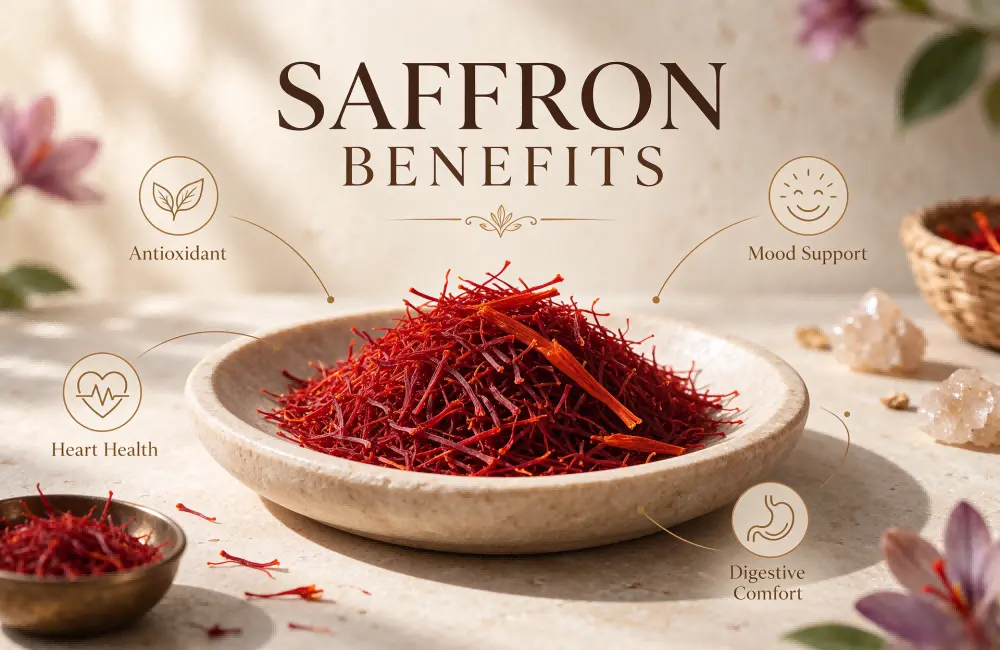
One of the most well-known uses for saffron bulk extract powder is in mood and emotional balancing solutions. Standardised saffron extract contains natural chemicals that provide moderate, natural neuronal emotional feedback to assist in relieving poor mood, irritation, and mental exhaustion associated with persistent stress. These benefits are due to the concentrated crocin and safranal, not the spice itself. Thus, to get a significant functional dosage, you usually need the standardised potency that saffron bulk extract powder is made for.
Eye Health and Visual Comfort
Bulk saffron extract powder is also often used in the manufacture of eye health products, especially those focused on combating eye tiredness due to extended screen exposure. The active chemicals are linked to enhanced ocular microcirculation and decreased stress in the nerves surrounding the eyes, which may help relieve symptoms including dryness, discomfort, and blurry vision. The application is growing in importance with the increasing use of digital devices, making saffron bulk extract powder a differentiated ingredient for the broader category of eye-care supplements.
Microcirculation and Metabolic Support
Saffron bulk extract powder is also utilised in formulae to promote general microcirculation and metabolism, as well as mood and eye health. The extract is linked to increasing blood flow to the extremities and aiding the body’s natural detoxification processes. Some formulators claim this may help lessen feelings of physical sluggishness and enhance complexion over time. These benefits are usually secondary to, but supportive of, the major therapeutic claims and contribute to the overall value proposition that makes saffron bulk extract powder popular across a variety of health categories. Formulators that use the combination product sometimes combine it with complementary botanicals to produce a wider profile of circulation or metabolic support, increasing its usefulness beyond any one application.
Quality, Sourcing, and Value Considerations for Saffron Bulk Extract Powder
Standardization and Testing for Consistent Potency
The concentration of crocin and safranal may vary greatly across growing locations and processing processes; therefore, standardisation is important when acquiring saffron bulk extract powder. Reputable providers validate potency with HPLC testing and publish extract ratios (usually about 20:1) so that formulators know precisely what functional dosage they are dealing with. Consistent batch-to-batch standardisation minimises the possibility of under-performing final goods and supports more accurate dosage claims. This is a significant consideration when you consider how expensive this ingredient is on a per-kilogram basis.
Storage, Shelf Life, and Stability
Crocin and safranal are extremely sensitive to light, heat, and moisture; thus, proper storage protects the saffron bulk extract powder investment. Recommended storage is in a sealed, cold, dry, and dark place, with a shelf life of about 24 months. Larger volumes are packaged in lined fibre and plastic barrels, which serve to further safeguard potency and to guarantee the premium component keeps its labelled activity until it reaches final formulation. Neglecting these measures, even for a short time, might greatly diminish the potency that makes the chemical more expensive in the first place.
Comparing Cost Per Active Unit vs Cheaper Alternatives
So, it is better to evaluate the price of each unit of active chemical, rather than the price per kilogram, to judge if saffron bulk extract powder is worth the money. A less costly extract with little or no validated crocin and safranal content may eventually need a considerably higher inclusion rate to provide equal functional benefit, hence limiting or eliminating any apparent savings. Often, buyers looking for confirmed, standardised saffron bulk extract powder from a transparent provider discover that the premium represents real potency, not just brand markup. Rather than using price as a proxy for quality, procurement teams may ask for a Certificate of Analysis with pricing quotations and make this comparison directly.
Conclusion
Organic saffron bulk extract powder is expensive since it is seldom sourced, difficult to harvest, and has standardised levels of crocin and safranal that are unmatched by your average plant. With thorough testing, organic certification, and complete batch traceability, this ingredient provides formulators with a reliable, high-value alternative for mood, eye health, and beauty-from-within products. Our staff has over 15 years of expertise exporting ingredients to distributors in over 50 countries, and we are ready to assist you in obtaining validated, high-purity saffron extract for your next product.
FAQ
Q1: Why does saffron bulk extract powder cost more than other botanical extracts?
Labor-intensive hand harvesting and limited annual crop yield keep supply constrained and pricing elevated.
Q2: What active compounds should I look for in saffron bulk extract powder?
Crocin and safranal content, verified through HPLC testing, are the key markers of potency.
Q3: What is saffron bulk extract powder commonly used for?
It is used in mood support, eye health, and microcirculation-focused supplement formulas.
Q4: How should saffron bulk extract powder be stored?
In a sealed, cool, dry, dark environment away from heat and light, typically for up to 24 months.
Q5: Is organic certification important when sourcing this ingredient?
Yes, it confirms pesticide-free cultivation and supports clean-label claims for finished products.
Source Verified Organic Saffron Bulk Extract Powder Today
Ready to formulate with a premium, standardized saffron bulk extract powder backed by full documentation? Our in-house testing, organic certification support, and temperature-controlled logistics help ensure the potency you pay for is the potency you receive. With flexible MOQs starting at 1kg, free samples, and multi-certification options including ISO, Kosher, and Halal, FEMVORA make sourcing straightforward for brands of every size, from small startups to established distributors. Contact femvora@landnutra.com today to request samples, a Certificate of Analysis, or a tailored quotation.
References
1. Journal of Ethnopharmacology, Crocin and Safranal: Bioactive Compounds of Crocus sativus L.
2. Phytomedicine, Standardized Saffron Extract and Mood-Related Outcomes: A Review.
3. Food Chemistry, Analytical Methods for Crocin Quantification in Saffron Extracts.
4. Journal of Agricultural and Food Chemistry, Cultivation Factors Affecting Saffron Yield and Composition.
5. Molecules, Stability and Degradation of Saffron Bioactive Compounds Under Storage.
6. Critical Reviews in Food Science and Nutrition, Economic and Quality Considerations in Global Saffron Trade.