
Nov 19, 2026
Why Use Capsicum Annuum Extract Powder in Supplements?
Brand owners generally search for botanical ingredients that are well-defined, simple to create, and supported by excellent documentation when formulating products for women. And that’s exactly what Capsicum annuum extract powder does. It is produced from Capsicum annuum L., and its capsaicinoid concentration is standardized by HPLC. It is also available in capsules, powders, drinks, and topical forms. For teams working on women’s wellness products, from daily routine capsules to cosmetic ideas that provide a warming feeling, having a consistent ingredient makes it easier to design and prepare for regulations. In this post, we discuss why formulators use this extract, what quality indicators to be aware of when buying, and how a supplier such as Femvora can help B2B customers from sample to delivery. Emphasis is on formulation and supply-chain issues, not health claims that must be in line with each market’s legislation.
Why Capsicum Annuum Extract Powder Fits Modern Women’s Wellness Formulations
Standardized Capsaicinoid Content for Consistent Formulation
“Trust is the basis of competition for women’s wellness brands, and trust begins with a product that works consistently. Femvora’s Capsicum annuum extract powder is standardized to ≥0.8% capsaicinoids by HPLC. Other standardization grades might be explored based on the project. With the active level scientifically confirmed, formulators have the confidence to calculate dosage and maintain minimal batch-to-batch variance. This is important for brands developing a multi-SKU range, such as a daily wellness pill, a powdered stick pack, and a complementary cosmetic product, all based on one component. Predictable potency also helps to reconcile label claims and prepare for stability, resulting in reduced development timelines for future releases.
Multi-Format Compatibility for Capsules, Beverages and Topicals
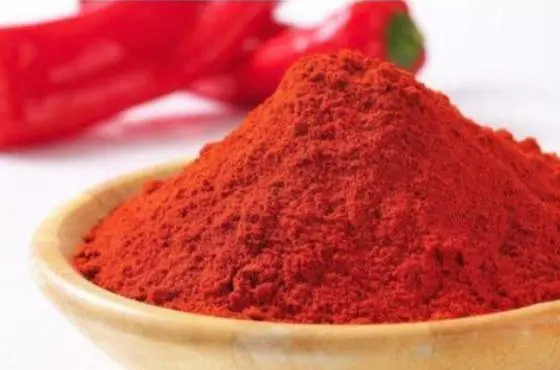
Product producers tend not to work with one dosage form, particularly in women’s health, where customers bounce between capsules, gummies, drink mixes and personal care. Capsicum annuum extract powder is available in water-dispersible, oil-soluble and ethanol-soluble versions, so it may be converted to capsules, clear drinks, creams and warming gels without large alterations to the sensory profile. This versatility allows a brand to tell a single ingredient narrative across several segments and preserve a limited supplier list. Femvora’s technical staff can advise on the best format for a certain matrix, how particle size impacts blending, and what to look for in combining the extract with other botanicals or minerals popular in women’s formulae.
Meeting Women’s Sensory and Dosing Preferences
Women’s supplements consumer research consistently demonstrates taste, tolerance, and habit matter as much as the ingredient list. Capsaicinoids are quite pungent, and hence the formulators commonly employ capsicum annuum extract powder at regulated inclusion levels and use encapsulating or masking techniques to make the finished product pleasant to use. Cosmetic ideas are appropriate for low-dosage designs, and ingestible items need dose ranges that are compliant with local legislation. With its liposomal and microencapsulation know-how, Femvora can help companies preserve lipid-soluble extracts from oxidation and enhance handling in powders and softgels. Any writing on the completed product about structure or function has to be checked against the rules of the target market and maintained within the bounds of what the evidence supports.
How Quality Control and Certifications Support Supplement Brands
HPLC Testing and Specification Transparency
Most procurement managers start with the specification sheet when seeking a source of Capsicum annuum extract powder. On Femvora, the product is listed as orange-red to crimson powder, HPLC tested, particle size: 80 mesh (100% pass), loss on drying ≤5.0%, ash ≤5.0%. Depending on the project, other appearance and standardization choices may be given, including greater purity capsaicin grades. These are subject to confirmation for each order. Clear specs empower a brand’s QA staff to compare incoming batches to its own acceptance criteria and identify divergence early. Each batch is accompanied by a certificate of analysis, and customers may examine the procedures and findings before ordering bigger numbers, a need for firms that must justify their ingredient selections to retailers and authorities.
Safety Limits for Heavy Metals and Microbes
Contaminant management is a key buying requirement as women’s supplements are commonly used daily over lengthy periods. The standard of Capsicum annuum extract powder is total heavy metals ≤10 ppm, lead ≤2.0 ppm, arsenic ≤1.0 ppm, and mercury ≤0.1 ppm. Microbial limits are defined as total plate count ≤1000 cfu/g, yeast and mold ≤50 cfu/g, and negative for E. coli and Salmonella. Third-party testing of heavy metals, microorganisms, and residual solvents further eases the buyer’s supplier certification burden. Femvora helps companies record due diligence, an increasingly crucial aspect of retailer onboarding and marketplace compliance, by publicizing these restrictions and supporting audits.
Documentation, Certifications and Shelf Life
Buyers need documentation that can hold up to examination, not just analytical data. Femvora offers COA, MSDS, and TDS papers and certifications such as ISO, Kosher, and Halal. Other certificates like FDA-related and ISO 9001 documents are available upon request (client should validate certification scope before publishing). Capsicum annuum extract powder has a shelf life of 24 months when stored properly in a cold, dry, sealed environment, away from intense light and heat. Controlled packaging in 1 kilogram aluminum foil bags or 25 kg drums reduces oxidation and volatilization of capsaicinoids and reduces inventory write-offs for brand owners and contract manufacturers that plan production runs months ahead.

Sourcing Capsicum Annuum Extract Powder from Femvora: Supply and Support
Integrated Manufacturing and R&D
Control of the full chain is required to guarantee a dependable supply of capsicum annuum extract powder. Femvora is an integrated producer, with in-house capabilities for extraction, fermentation, encapsulation, and completed product OEM, so there are no middlemen between the customer and the manufacturing line. The firm has more than fifteen years of expertise in exporting ingredients to brand owners and distributors in over fifty countries. The R&D team has more than 10 years of experience in the purification of natural products. In addition, plant visits, production films, and on-site audits are available. The low-temperature supercritical CO2 extraction and membrane separation technologies enable to maintain the active chemicals. For women’s health companies, this implies a partner that can help with raw-material procurement and later-stage product development.
Customization, MOQ and Samples
New brands and major distributors have various demands, and procurement of Capsicum annuum extract powder should be able to cater to both. The minimum purchase is 1 kilogram, and free samples are available from 20 g to 1 kg. Small trial runs for OEM projects are also available, which makes it possible to test a recipe before scaling up. Custom extract ratios. Specific extracts available from 5:1 up to 100:1 ratio. Custom specifications available to discuss with the technical team. The firm can source botanicals, functional monomers, chelated minerals, probiotics, and liposomes all in one place, enabling a brand to centralize its buying if it is establishing a women’s wellness collection. Annual contracts may also provide price stability in the face of market turbulence.
Global Logistics and Customs Support
Delivery dependability is as vital as specification to every buyer of Capsicum annuum extract powder. Femvora has stock available for immediate dispatch, and for modest orders, it ships door-to-door by DHL, FedEx or UPS, and for large quantities, it ships by air, sea or rail with FOB, CIF, DDU and DDP terms. For marine freight, heat-sensitive products are sent in insulated, moisture-proof packaging, and monitored reefer containers might be used. The staff has knowledge of EU, US, Southeast Asian, and Middle Eastern food rules, pre-screens labels and ingredients for a lower chance of detention, and creates customs declarations, certificates of origin, and health certificates. We work with the best carriers, and if your package is lost or damaged, we can expedite claims.
Conclusion
Capsicum annuum extract powder provides women’s wellness companies with a standardized, HPLC-tested ingredient that can be used in capsules, drinks, and cosmetic applications. Its usefulness is best when matched with a provider that has explicit requirements, documented quality control, and flexible ordering. We bring together integrated production, a deep R&D capability, stringent controls on contaminants, and worldwide logistics to provide formulators with a robust platform for compliant, well-documented goods. The final label text must always comply with the rules of each target market.
FAQ
1. What is the standard specification of Femvora’s Capsicum annuum extract powder?
The standard grade is ≥0.8% capsaicinoids by HPLC, in an orange-red to red powder form from Capsicum annuum L. Other grades and purities may be available on request and should be confirmed per project.
2. What is the minimum order quantity and packaging?
The MOQ is 1 kg. Packaging is 1 kg per aluminum foil bag or 25 kg per fiber or plastic drum, and free samples can be arranged.
3. How long can the powder be stored?
Shelf life is 24 months when stored airtight in a cool, dry place away from strong light and heat.
4. Which documents and tests come with an order?
Femvora can provide COA, MSDS, and TDS documents, along with heavy metal, microbial, and residual solvent testing. Certifications include ISO, Kosher, and Halal, with others available on request.
5. Can the ingredient be used in women’s wellness products?
It can be formulated into capsules, powders, beverages, and cosmetic concepts developed for women’s wellness lines. Product claims must comply with local regulations, and no medical or disease-related claims should be made.
Ready to Develop Your Next Women’s Wellness Formula?
Whether you are launching a first product or expanding an established range, Femvora can support your project with samples, technical documents, custom specifications, and reliable global delivery. Tell us your target market, dosage form, and quality requirements, and our team will recommend a suitable grade of capsicum annuum extract powder. Request a free sample, ask for the latest COA, or arrange a factory audit today. Contact us at femvora@landnutra.com and let’s build a compliant, high-quality product together.
References
1. Luo XJ, Peng J, Li YJ. Recent advances in the study on capsaicinoids and capsinoids. European Journal of Pharmacology. 2011;650(1):1-7. https://doi.org/10.1016/j.ejphar.2010.09.074
2. Fattori V, Hohmann MSN, Rossaneis AC, Pinho-Ribeiro FA, Verri WA. Capsaicin: current understanding of its mechanisms and therapy of pain and other pre-clinical and clinical uses. Molecules. 2016;21(7):844. https://doi.org/10.3390/molecules21070844
3. Bley K, Boorman G, Mohammad B, McKenzie D, Babbar S. A comprehensive review of the carcinogenic and anticarcinogenic potential of capsaicin. Toxicologic Pathology. 2012;40(6):847-873. https://doi.org/10.1177/0192623312444471
4. Ludy MJ, Moore GE, Mattes RD. The effects of capsaicin and capsiate on energy balance: critical review and meta-analyses of studies in humans. Chemical Senses. 2012;37(2):103-121. https://doi.org/10.1093/chemse/bjr100
5. Caterina MJ, Schumacher MA, Tominaga M, Rosen TA, Levine JD, Julius D. The capsaicin receptor: a heat-activated ion channel in the pain pathway. Nature. 1997;389:816-824. https://doi.org/10.1038/39807
6. Whiting S, Derbyshire E, Tiwari BK. Capsaicinoids and capsinoids. A potential role for weight management? A systematic review of the evidence. Appetite. 2012;59(2):341-348. https://doi.org/10.1016/j.appet.2012.05.015
Online Message